

Spill Kits and Refills
Everything for the spill, from cab to plant floor.
Run the numbers below with your own usage, then let us walk your site. We’ll map your spill points, compare what you use today, and send a plan to cut plastic and disposal weight.
Most pads, socks, pillows, and booms are made from polypropylene, a plastic made from oil and gas. Making it releases CO2, and burning it releases more. Green Boom absorbents are made from plants, which pull CO2 out of the air as they grow. Enter what you use in a typical year.
Industry-typical weights for each item. Change them to match the products you buy.
Polypropylene production from the American Chemistry Council’s 2021 cradle-to-gate study of PP resin. Burning figure is the carbon in polypropylene released as CO2. Plant uptake assumes about 41% carbon in the dry fiber.
Fossil CO2 avoided is the CO2 from making the polypropylene you no longer buy, plus burning it if your spent absorbent is incinerated. Plant uptake is the CO2 the plants took in while growing; it stays in the fiber and returns to the natural cycle as the fiber breaks down, so we show it separately rather than adding it to the total. Green Boom’s own manufacturing and shipping are not included. A passenger car emits about 0.89 lb of CO2 per mile (US EPA). A plastic grocery bag weighs about 5.5 g. Green Boom pads are rated for up to 10 uses.
Clay floor absorbent holds about 2 gal of oil per 50 lb in independent testing. Green Boom Loose Absorbent holds up to 18 gal per 30-lb bag. Enter the clay you use in a year and see the difference in weight, disposal, and CO2.
Both absorb about 960 gal of oil a year: 480 bags of clay, or about 54 30-lb bags of Green Boom.
Clay CO2 is an estimate for mining, kiln drying, and processing clay. Change it under Capacities used if your supplier publishes a figure. Plant uptake uses the factor from Calculator 1. Green Boom manufacturing and shipping are not included.
Spill kits are full of polypropylene pads, socks, pillows, and booms. Enter the kits you buy or restock in a year. We match each one to a Green Boom kit with the same contents, made entirely from plants.
Plastic and CO2 use the polypropylene weights and CO2 factors from Calculator 1, and the same choice of landfill or incineration.
Your report pulls in everything you entered in the calculators above. We total the plastic, CO2, and waste you’d remove by switching, match each item to a Green Boom product, and build a PDF you can share with your team.
The report uses the same weights, CO2 factors, pad reuse, landfill or incineration choice, disposal cost, and refill setting as the calculators above.
Estimates for typical polypropylene absorbents when they are thrown away. Spill kits count at their rated capacity, and clay at the capacity in Calculator 2.
Oily waste is spent absorbent plus the oil it holds. Composting with Oily™ depends on local rules, because used absorbent takes on the properties of what it absorbed.
USDA BioPreferred® and DIN CERTCO certify our absorbents as 100% biobased. No polypropylene skin, no plastic filler.
Our absorbents are made from plant fibers that break down naturally, instead of plastic that lasts for centuries.*
The EPA leaching test used to classify waste. Oil stays locked in the fiber.
Add Oily™ to a drum of used Green Boom absorbent. Naturally occurring microbes break the oil down in weeks.
*Used absorbent takes on the properties of what it absorbed. Characterize it and dispose of it according to local, state, and federal regulations.
What you use today, how much, and where spills happen. Your calculator results come along.
A call or site walk covering spill points, products, storage, and how spent absorbent leaves your site.
A short report with product matches, plastic and weight removed, and your disposal savings.
We reply within two business days.
Thank you. Your request has gone to the Green Boom team, and we’ll be in touch shortly.
Booms, pillows, socks, pads, loose absorbent, and spill kits, all 100% biobased with zero polypropylene, plus Oily™ remediation for spent absorbent.
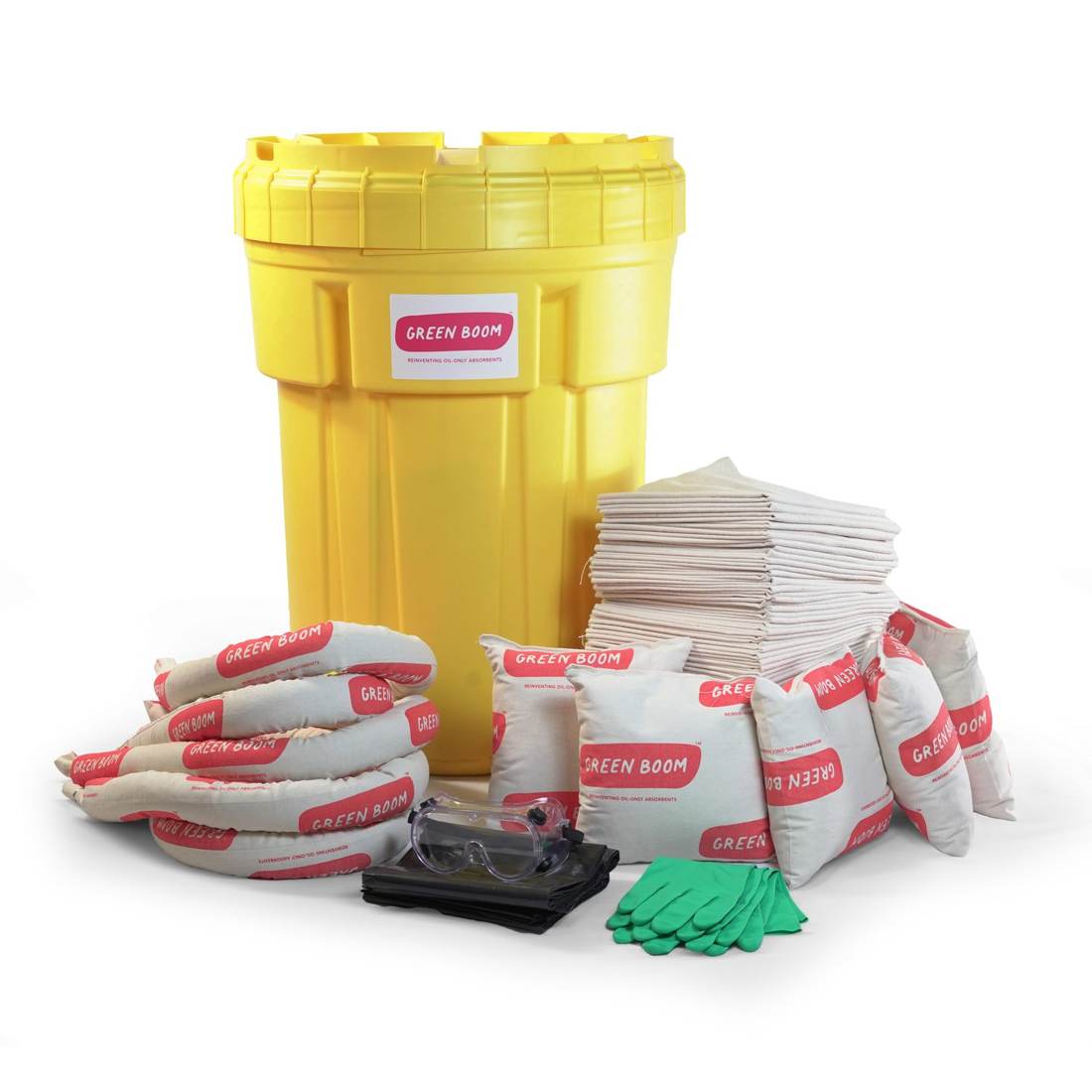
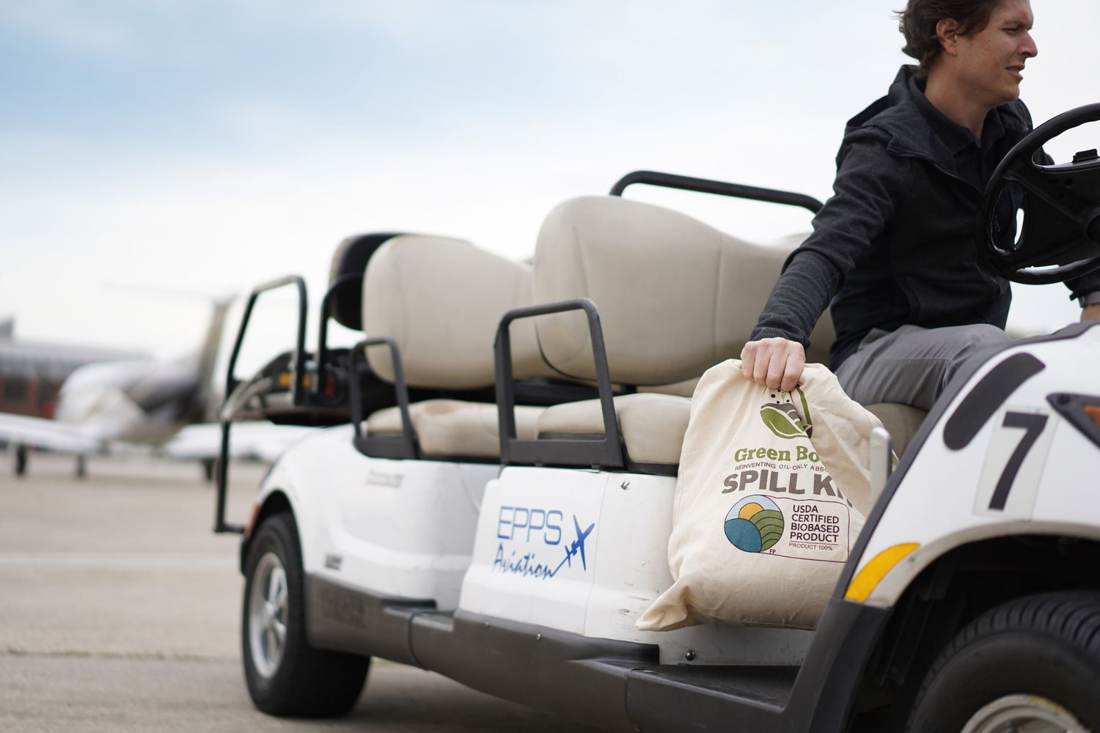
Pre-packed kits of loose absorbent, socks, pillows, pads, and booms for the truck cab to the plant floor, plus boxed refills. Custom kits available.
From an 11-lb strap bag that absorbs up to 10 gallons to a 95-gallon drum that holds up to 67.5 gallons.
Boxed refills restock the 20-gal drum and the 30-gal drum. Keep the drum; replace what you used.
Every absorbent in the kit is 100% biobased.
| Kit | Container | Contents | Absorbs | Weight | Part no. |
|---|---|---|---|---|---|
| 10-gal kit | Strap bag | 3 socks · 25 pads · bags | 10 gal | 11 lb | SK010ISM |
| 20-gal kit | 20-gal drum | 3 socks · 2 pillows · 40 pads · bag · PPE | 20 gal | 29 lb | SK020ISPM |
| 20-gal refill kit | Box | 3 socks · 2 pillows · 40 pads · bag · PPE | 20 gal | 20 lb | SK020ISPM2R |
| 30-gal kit | 30-gal drum | 5 socks · 5 pillows · 50 pads · bag · PPE | 30 gal | 42 lb | SK030ISPBM |
| 30-gal refill kit | Box | 5 socks · 5 pillows · 50 pads · bag · PPE | 30 gal | 28 lb | SK030ISPBMR |
| 65-gal kit | 65-gal drum | 10 lb loose · 10 socks · 4 pillows · 100 pads · PPE | 57 gal | 78 lb | SK065S |
| 95-gal kit | 95-gal drum | 10 lb loose · 7 socks · 8 pillows · 2 booms · 100 pads · PPE | 67.5 gal | 108 lb | SK095S |
Absorbents meet ANSI and MIL-spec standards for static decay · Absorbs oil only, not water · Passes TCLP
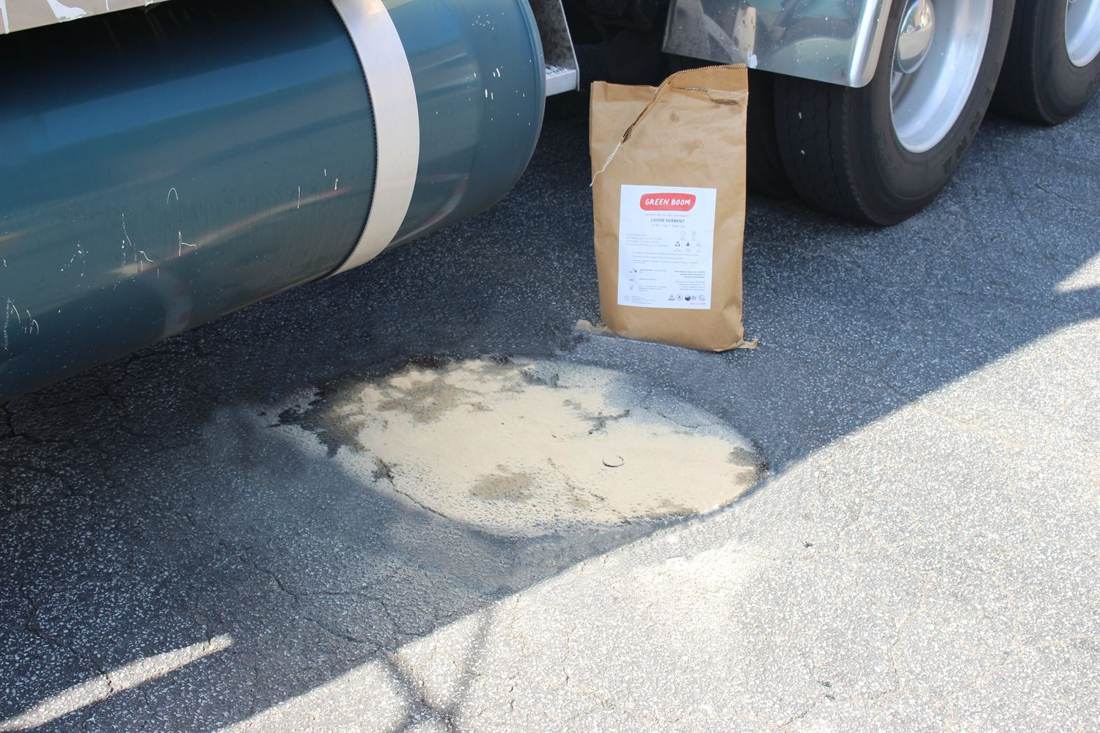
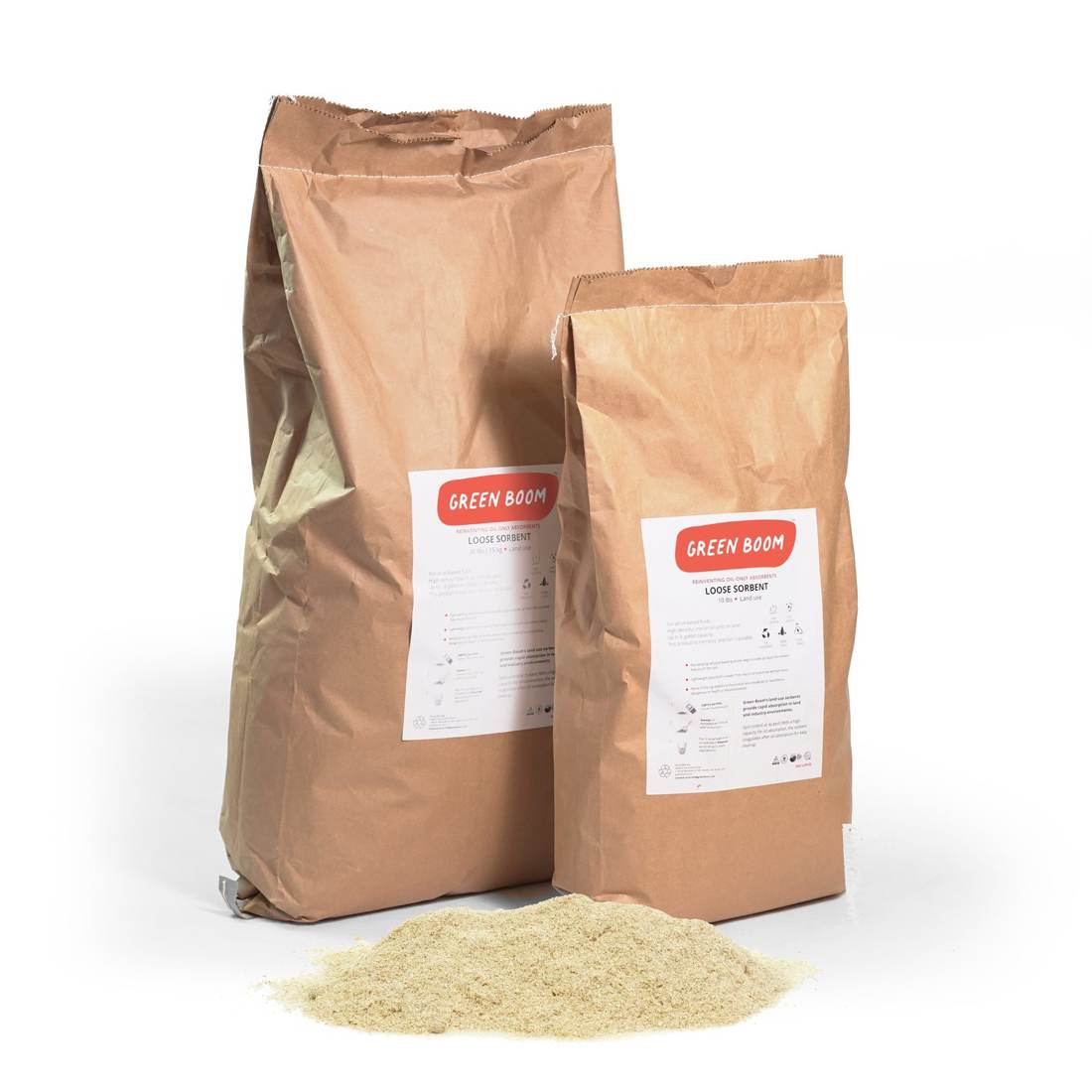
Fast-wicking cellulose granules that absorb oils and fuels, not water. More absorbed per pound means less to sweep, bag, and pay to haul.
Clay floor absorbents contain crystalline silica and carry a warning label. Green Boom contains none.
A 30-lb bag absorbs up to 18 gallons, and the granules lock oil in for a clean sweep.
Lighter than clay to carry, spread, and send for disposal.
| Size | Bag weight | Absorbs per bag | Per case | Part no. |
|---|---|---|---|---|
| Small | 3 lb | up to 1.8 gal | 6 bags | L0003S-6 |
| Medium | 10 lb | up to 6 gal | 1 bag | L0010S |
| Large | 30 lb | up to 18 gal | 1 bag | L0030S |
Hydrophobic · Non-toxic · Silica-dust free · Recyclable paper bags · Absorbs oils and fuels, not water · Passes TCLP
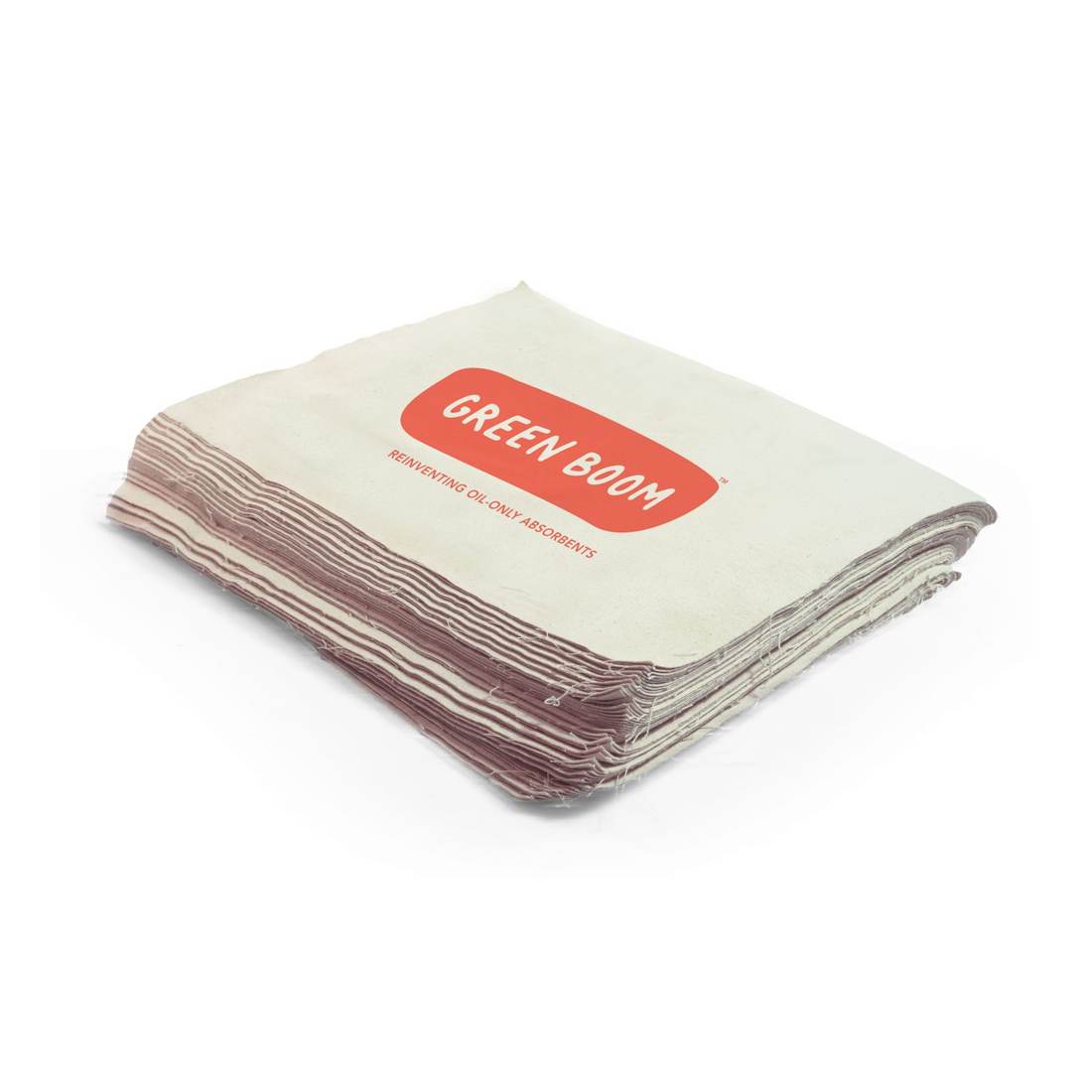
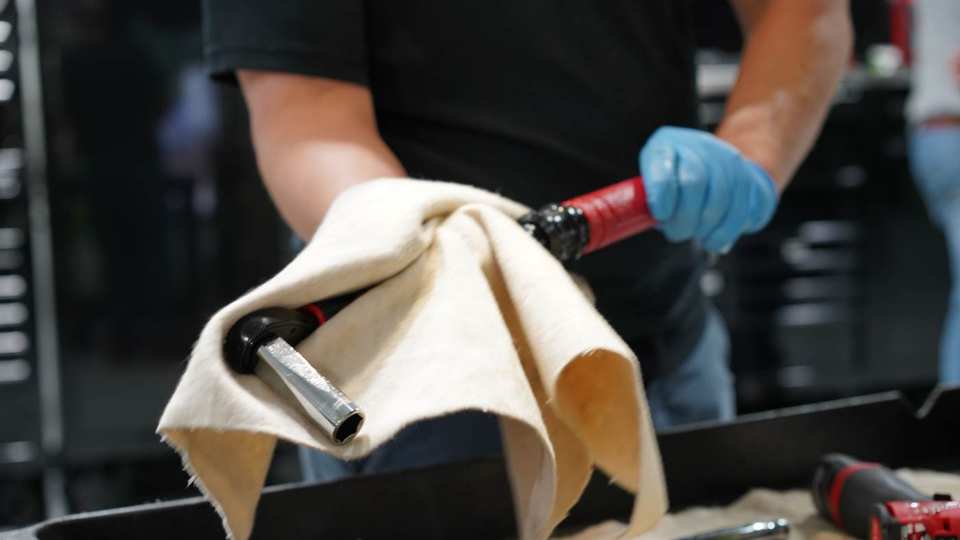
Cotton oil-only pads that pick up oil, leave water, and go back to work. Up to 0.4 gallons per pad and 40 gallons per case.
Wring out and reuse each pad up to 10 times before it is spent.
Cotton fabric replaces meltblown polypropylene. Nothing synthetic goes in the bin.
Reuse plus higher capacity means far fewer pads bought, bagged, and hauled.
| Item | Dimensions | Absorbs per pad | Per case | Absorbs per case | Case weight | Part no. |
|---|---|---|---|---|---|---|
| Oil-only pad | 15" × 20" | up to 0.4 gal | 100 | up to 40 gal | 20.5 lb | M2015 |
Completely hydrophobic · UV-resistant cotton fabric · Agglomerates and locks in oil for easy cleanup · Passes TCLP
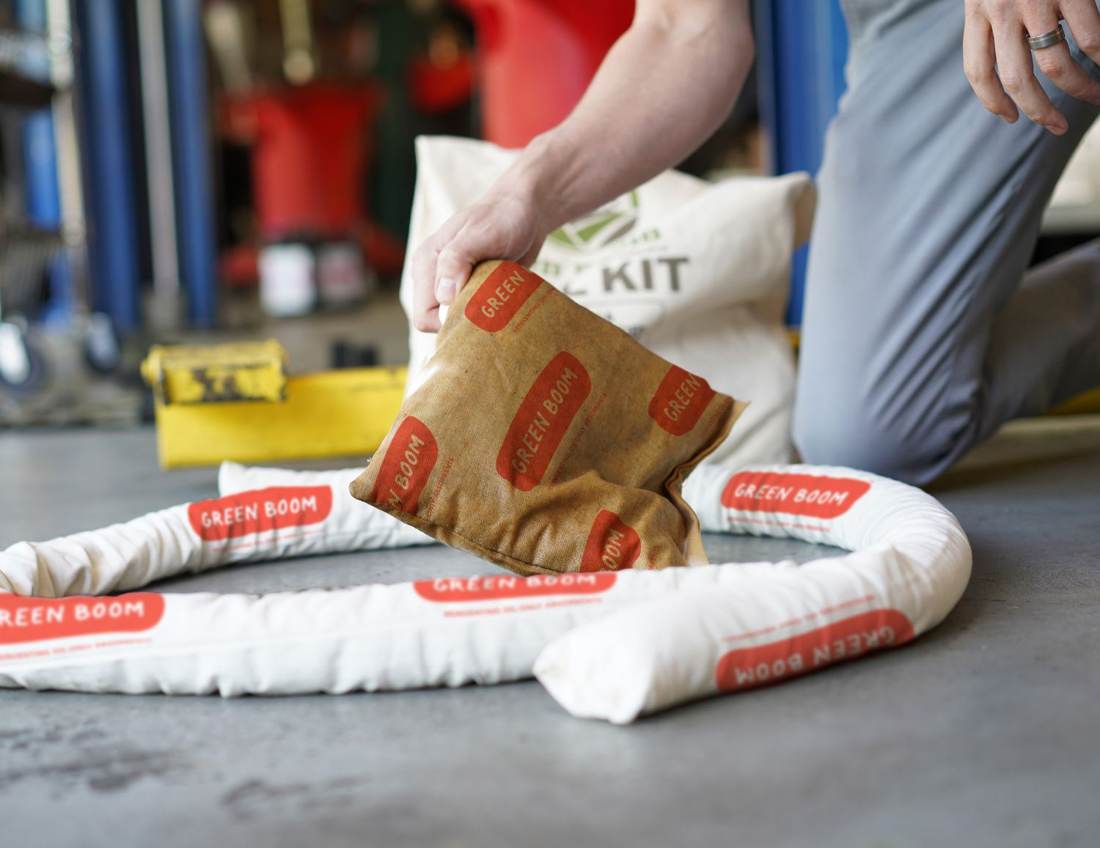
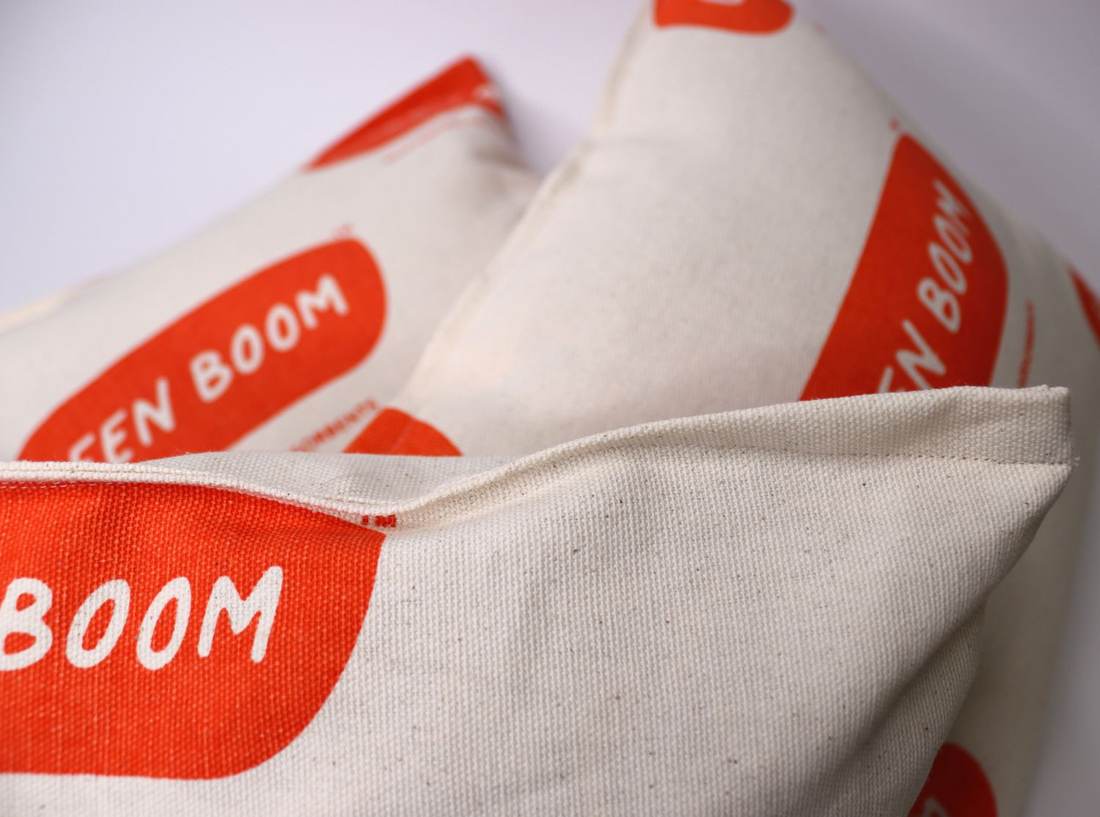
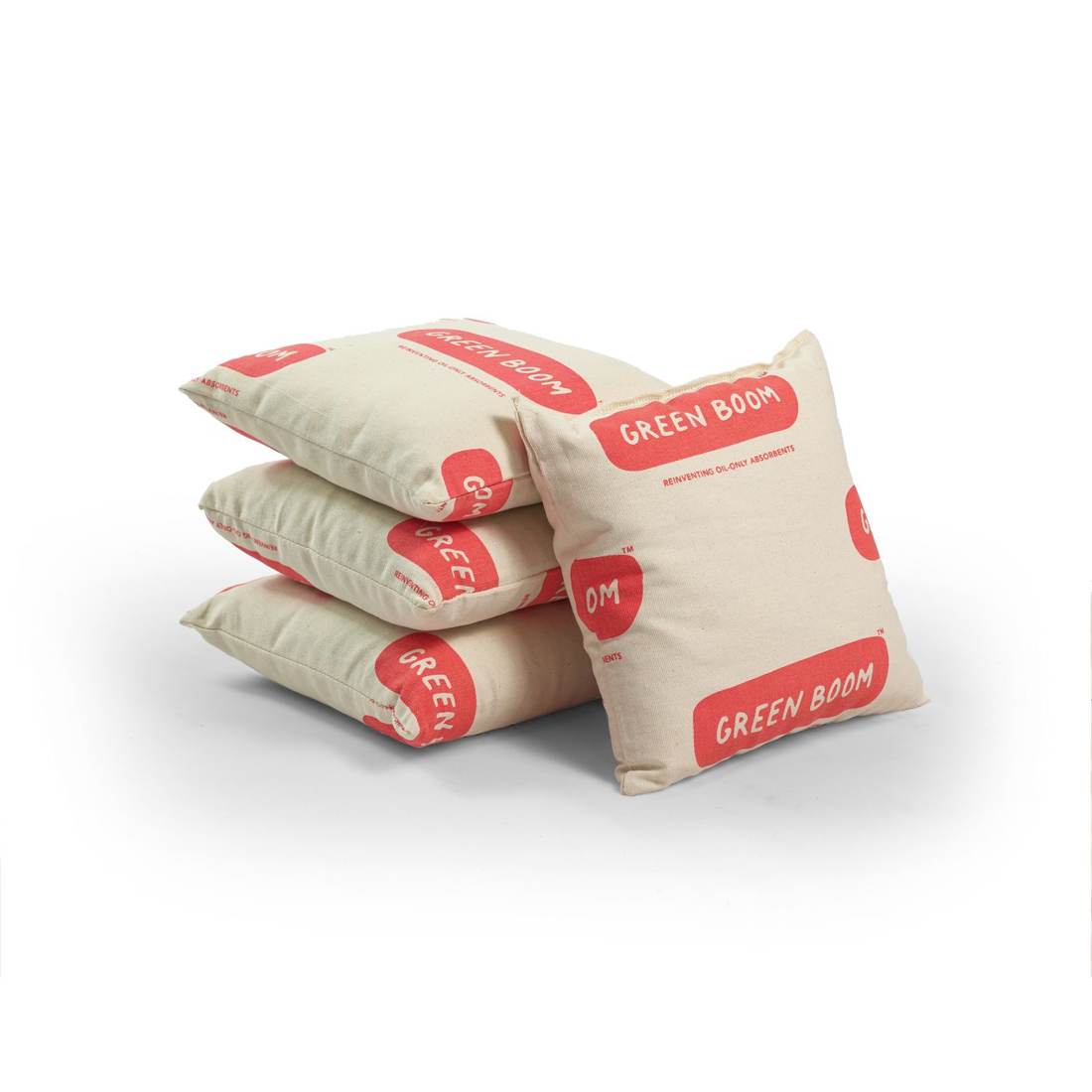
Drop one under a leak, into a sump, or onto the water. Each pillow soaks up oil, sheds water, and keeps plastic out of your waste stream.
Fast wicking pulls oil in and locks it there, so it doesn’t leach back out.
100% biobased canvas and fill. Nothing petroleum-based goes into the drum.
Up to a gallon per 16" pillow means fewer units used and less spent material to dispose of.
| Size | Dimensions | Absorbs per pillow | Per case (10) | Case weight | Part no. |
|---|---|---|---|---|---|
| Small | 10" × 10" | up to 0.5 gal | up to 5 gal | 12 lb | P1010S |
| Medium | 12" × 12" | up to 0.75 gal | up to 7.5 gal | 17 lb | P1212S |
| Large | 16" × 16" | up to 1 gal | up to 10 gal | 20 lb | P1616S |
Completely hydrophobic · Absorbs oil only, not water · For land, marine, and industrial spills · Passes TCLP
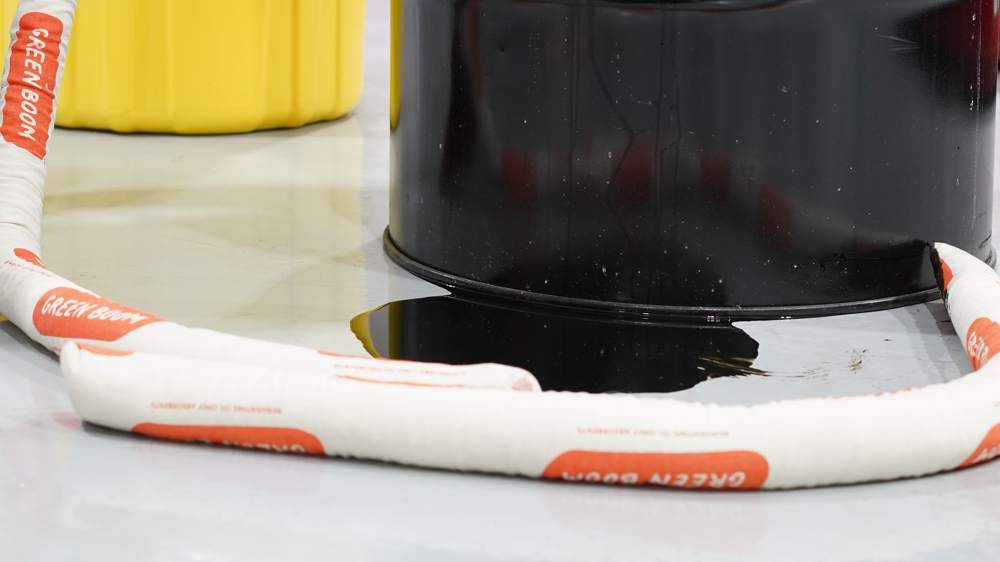
Moldable socks that wrap machinery, drains, and drip zones. Each 48-inch sock holds up to 1.2 gallons of oil, with nothing made from petroleum.
Fast wicking pulls oil in and locks it there, so it doesn’t leach back out.
100% biobased skin and fill. No polypropylene fibers left on the shop floor.
More oil per sock means fewer socks in the drum and less weight to haul.
| Size | Dimensions | Absorbs per sock | Per case (10) | Case weight | Part no. |
|---|---|---|---|---|---|
| Small | 3" × 12" | up to 0.3 gal | up to 3 gal | 5 lb | S0312S |
| Medium | 3" × 24" | up to 0.6 gal | up to 6 gal | 10 lb | S0324S |
| Large | 3" × 48" | up to 1.2 gal | up to 12 gal | 20 lb | S0348S |
Completely hydrophobic · Tear-resistant, moldable construction · Oil, diesel, fuel, and machine leaks · Passes TCLP
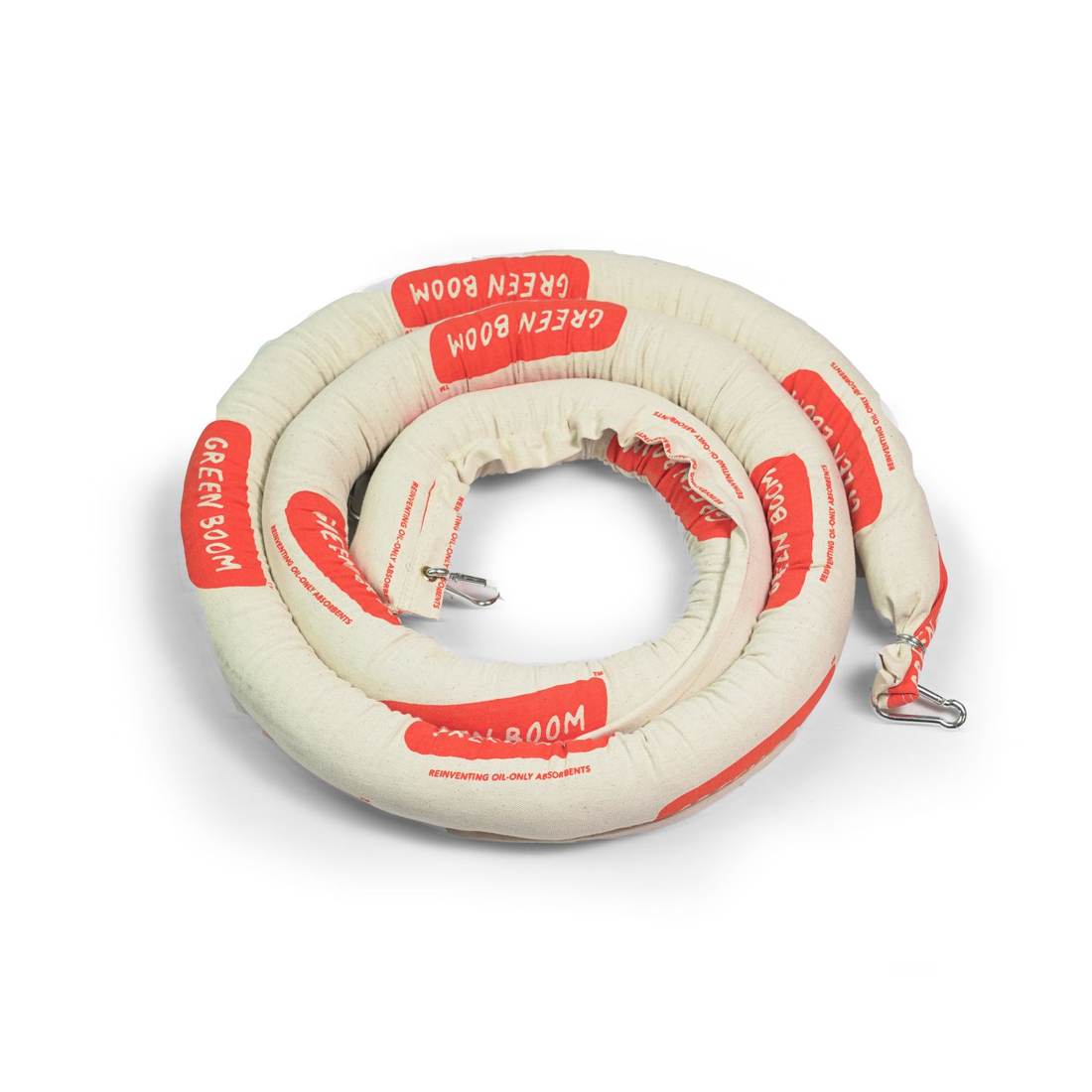

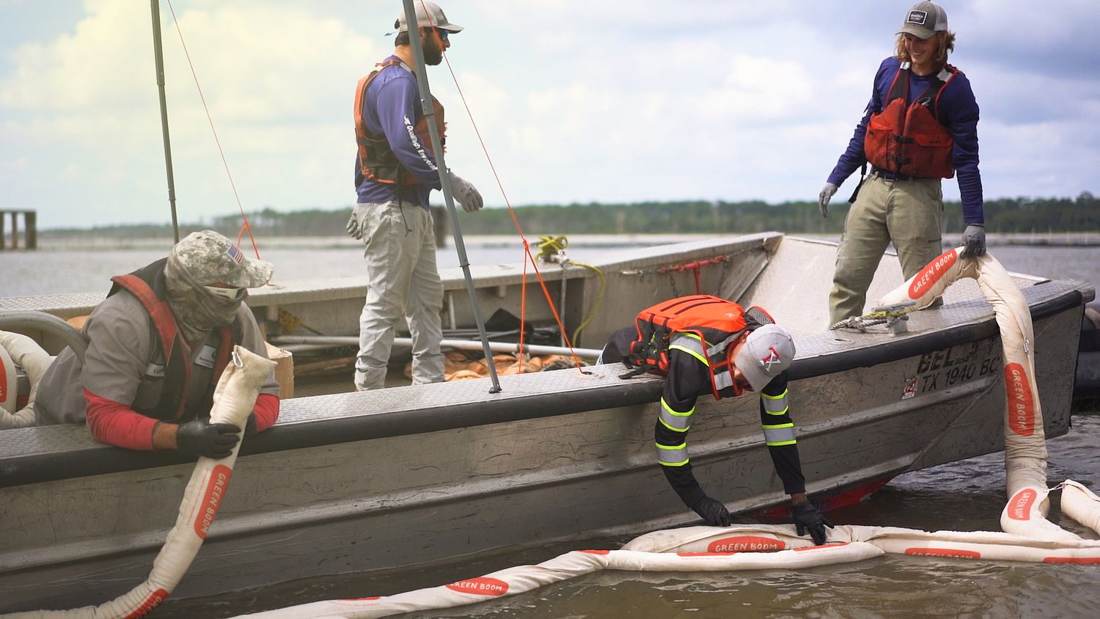
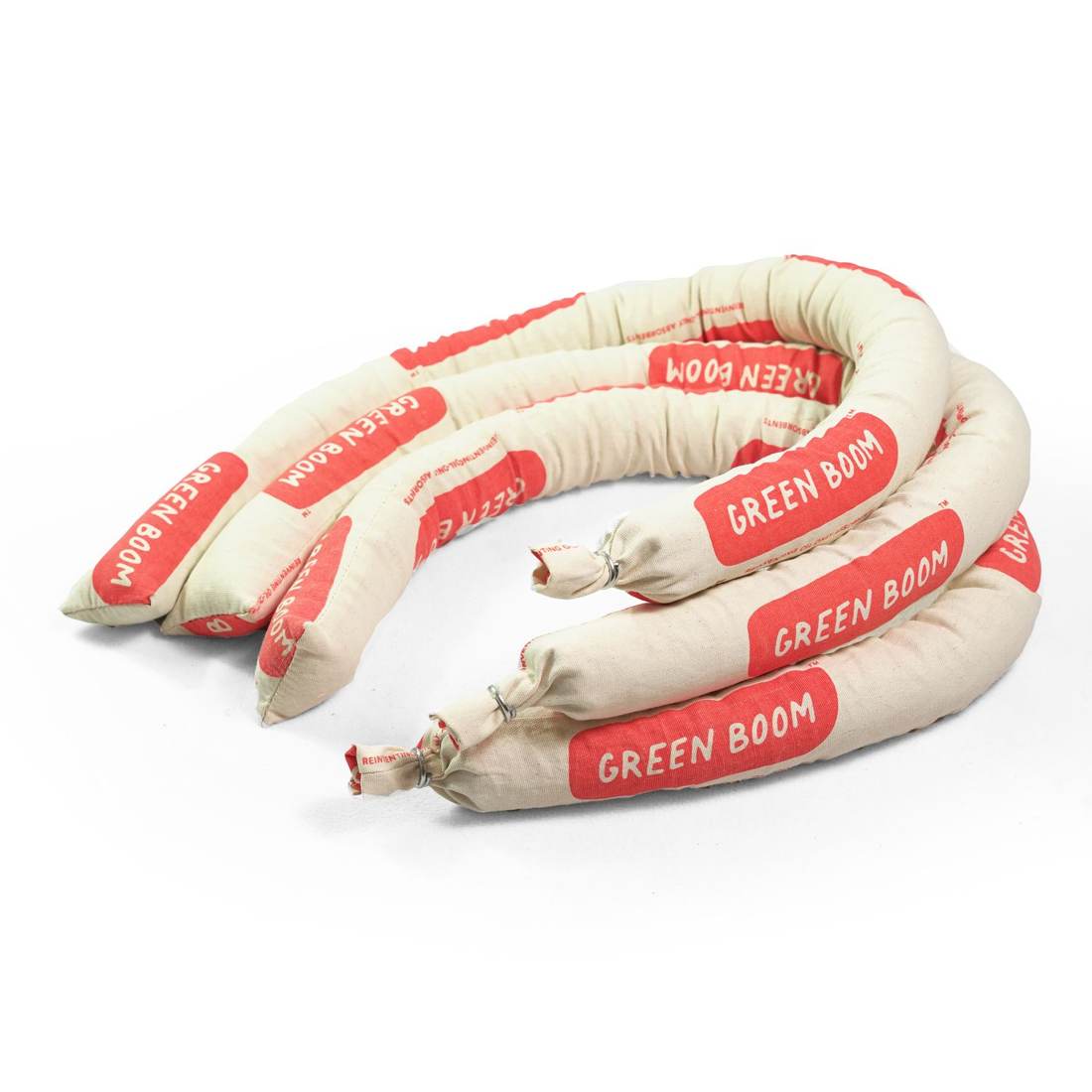
Hydrophobic booms that float, wick oil fast, and leave the water behind. Up to 12 gallons per 10-ft boom, with no polypropylene to retrieve, shred, or landfill.
Fast wicking pulls oil in and locks it there, so it doesn’t leach back out.
A cotton-canvas skin over natural fiber fill. No polypropylene to shed into the waterway.
More oil held per boom means fewer booms to deploy, recover, and pay to haul away.
| Size | Dimensions | Absorbs per boom | Per case | Case weight | Part no. |
|---|---|---|---|---|---|
| Small | 3" × 10 ft | up to 3 gal | 8 | 28 lb | B0310S |
| Medium | 5" × 10 ft | up to 6 gal | 4 | 24 lb | B0510S |
| Large | 8" × 10 ft | up to 12 gal | 4 | 48 lb | B0810S |
Completely hydrophobic · UV- and tear-resistant skin · Zinc-plated steel clips link sections end to end · Passes TCLP
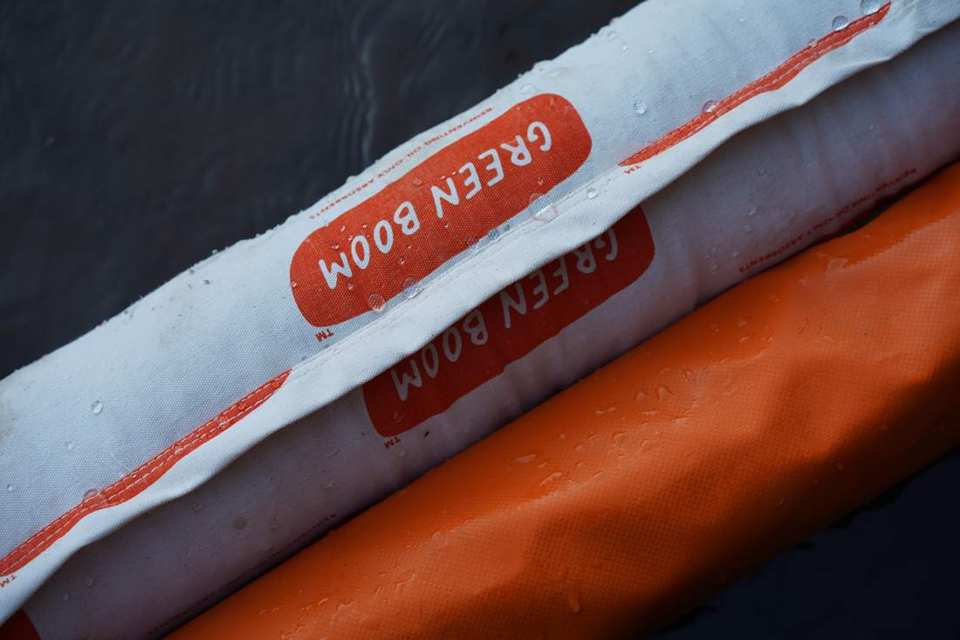
A combo boom pairs a skirted containment boom with a Green Boom absorbent boom attached alongside. The skirt hangs below the waterline, so wakes and current can’t carry oil underneath, while the absorbent boom wicks the oil out of the water.
When the absorbent boom is spent, swap in a fresh one while the containment boom stays in place. Combo booms are built to order: tell us the length, skirt depth, and boom size your site needs.
Boat wakes and tidal swings push oil under a plain absorbent boom. The skirt holds the sheen at the surface so the absorbent can take it up.
Run across an outfall or ditch to catch oily runoff after rain while the water keeps flowing.
Set at an angle to steer a slick toward the bank or a collection point, where the absorbent boom wicks it up.
Ring refinery berths, power-plant intakes, and retention ponds as standing protection.
Deploy along bridge, dredging, and shoreline work to keep equipment drips out of the waterway.
Exclusion booming keeps an approaching slick away from beaches, wetlands, and water intakes.
The absorbent boom is 100% biobased; the skirted containment boom is a reusable synthetic barrier.
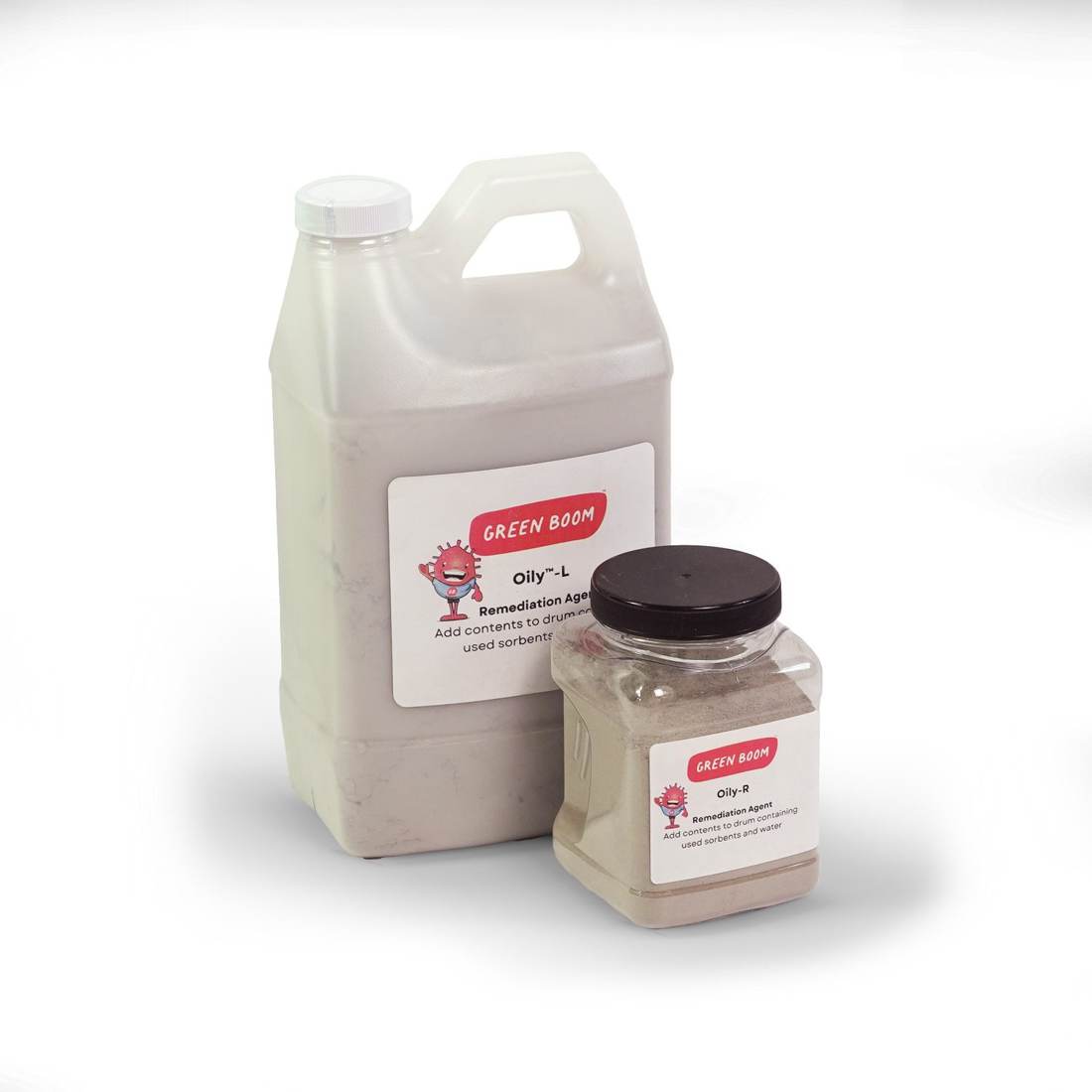
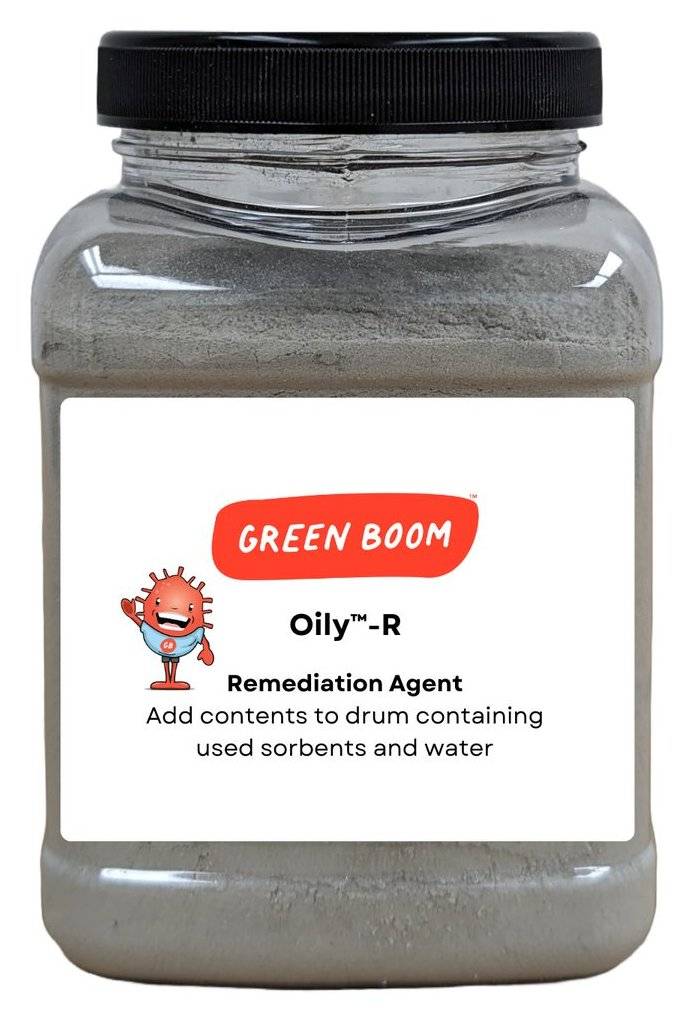
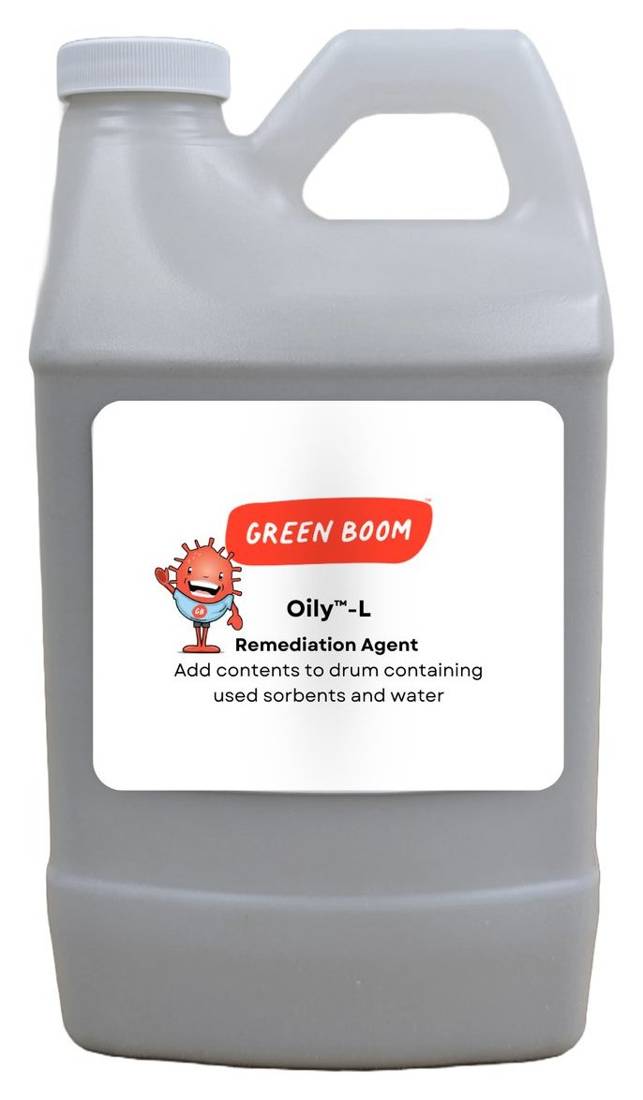
Add Oily™ to the drum of used Green Boom absorbents. Naturally occurring, hydrocarbon-eating bacteria break the absorbed oil down in a few weeks.
Bacteria that thrive on oil break down absorbed hydrocarbons in just a few weeks.
Plastic-free absorbents plus Oily™ turn spent absorbent into material that can be treated, not just buried.
Less waste to transport, and less to pay for at the landfill or the incinerator.
| Product | Container | Size | Treats up to |
|---|---|---|---|
| Oily™-R | Jar | 16 oz | 20 lb of oily waste |
| Oily™-L | Jug | 64 oz | 80 lb of oily waste |
Naturally occurring, non-GMO microbes on a mineral carrier · Add to a drum of used Green Boom absorbents and water · Avoid breathing dust; see SDS · Follow local regulations for oily waste
SludgeCure™ turns wet, sloppy drill cuttings and biosolids into firm, non-leaching solids that are safer to handle and easier, and less costly, to dispose of. Three 100% biobased versions: SludgeCure™-W and SludgeCure™-O for drilling, and SludgeCure™-Bio for water and wastewater plants.
Drill cuttings come off the shakers carrying water or oil, and biosolids leave the press with most of their weight still water. Left wet, they are messy to handle, can leach, and cost more to haul and dispose of. Stabilizing them first changes all of that.
Stable, firm cuttings are safer to handle, store, and transport than liquid sludge.
Stabilized cuttings load and haul as a solid with the equipment already on site.
Free water or oil is bound up, so far less liquid drains from the pile or the load.
Liquids and contaminants stay locked in the solid instead of leaching back out.
Solids avoid the higher cost of hauling and treating liquid waste.
Independently tested to the U.S. EPA Toxicity Characteristic Leaching Procedure (SW-846 Method 1311).
| Product | Type | Use on | Package | Dosage |
|---|---|---|---|---|
| SludgeCure™-W | Hydrophilic | High-water content cuttings (WBM) | TBD | TBD |
| SludgeCure™-O | Hydrophobic | High-oil content cuttings (OBM) | TBD | TBD |
| SludgeCure™-Bio | Hydrophilic | Dewatered biosolids and wastewater sludge | TBD | TBD |
Ask us about the right dosage for your cuttings or biosolids.
A hydrophilic stabilizer for high-water content drill cuttings from water-based mud systems. It binds free water so cuttings handle, haul, and dispose as a stable, non-leaching solid.
Firm, stable cuttings are safer to store, load, and haul than wet, sloppy sludge.
Binds the free water in WBM cuttings, so less liquid drains from the pile or the load.
Water and contaminants stay bound in the solid instead of leaching back out.
Stabilized cuttings are ready to load, haul, and dispose with standard equipment.
A hydrophobic stabilizer for high-oil content drill cuttings from oil-based mud systems. It locks free oil in, so cuttings handle, haul, and dispose as a stable, non-leaching solid.
Firm, stable cuttings are safer to store, load, and haul than slick, oily sludge.
Takes up the free oil in OBM cuttings, so less liquid drains from the pile or the load.
Oil stays bound in the solid instead of leaching back out.
Stabilized cuttings are ready to load, haul, and dispose with standard equipment.
A biobased solidifier for dewatered biosolids, lagoon and digester cleanouts, and drying beds at water and wastewater plants. It binds free water so biosolids handle, haul, and dispose as a stackable solid.
Binds free water so biosolids stack and can pass the EPA Paint Filter Liquids Test (Method 9095B) for landfill acceptance.
A low-density plant material instead of heavy lime, cement, or kiln dust.
No ammonia release, no pH spike, and no crystalline silica dust.
A plant-based carbon source, like the straw already used to compost biosolids.
SludgeCure™-Bio solidifies and conditions biosolids for handling and disposal. It is not a pathogen-reduction or vector-attraction-reduction process under 40 CFR Part 503.
Spread SludgeCure™ over the cuttings or biosolids in the pit, bin, box, or roll-off.
Blend with an excavator, loader, or mixer until the material firms up.
Load out and dispose of it as a stable, stackable solid.
Patented, plant-based absorbents that take in oil fast, hold it securely, stand up to hard use, then break down when the job is done.
Our patented treatment makes both the natural-fiber fill and the cotton skin pull oil in and push water away, so they absorb oil only.
Oil is drawn deep into the fiber structure and held there. It stays locked in instead of leaching back out.
Add Oily™ and naturally occurring microbes digest the hydrocarbons, leaving material that can be composted where regulations allow.
Patented, water-repellent cotton skins resist tears, UV, and abrasion.
Durable construction stays in service longer between changeouts.
Pads can be wrung out and reused up to 10 times.
Oil stays in the fiber, with no leaching when you pick it up.
100% biobased skins and fill. No plastic in your waste stream.
With Oily™ microbes, spent absorbent breaks down instead of going to landfill.
Absorb oil, not water. Reuse pads up to 10 times.
Spent absorbent goes in the drum, with no plastic mixed in.
Add Oily™. Bacteria break the oil down in weeks.
Biodegradable material, handled per local regulations.

USDA BioPreferred® Program. Third-party tested: 100% biobased content.
Biobased products scheme. Registration no. 8C262, under surveillance through 2027.
Patented water-repellent treatment for natural-fiber fill and cotton cloth. Further patents pending.
Socks, booms, and pillows meet the EPA definition of a sorbent under the National Contingency Plan (40 CFR 300.915(g)).
Green Boom North America LLC quality management system, registered by Perry Johnson Registrars.
Sorbent license exemption from the Office of Spill Prevention and Response.
Kit absorbents meet ANSI and MIL-spec standards for static decay.
Independently tested to the U.S. EPA Toxicity Characteristic Leaching Procedure (SW-846 Method 1311).
Scientists, engineers, and operators on a mission to take plastic out of oil spill response, with a holistic oil-to-soil solution no one else offers.
Chemical engineer (Georgia Tech, University of Auckland) and co-inventor of Green Boom’s patented absorbent technology.
Former Professor of Chemical Engineering at Georgia Tech and co-inventor of Green Boom’s patented absorbent technology.
Oil cleanup has long relied on polypropylene absorbents, sending thousands of tons of oil-soaked plastic to landfill every year. Green Boom set out to replace them with absorbents that perform better and leave nothing behind.
Research and development begins in Atlanta.
Manufacturing begins in Georgia.
European sales office opens; Middle East partnerships established.
Manufacturing moves to a larger Georgia facility to expand capacity.
U.S. Patent 12,435,253 granted for our water-repellent natural-fiber technology.
Green Boom oil-only absorbents are stocked by the distributors you already work with, across North America, Europe, and the Middle East.






NAPA is Green Boom's exclusive partner in the US automotive market. Repair shops, quick lubes, and fleets get our pads, Loose Absorbent, pillows, and the NAPA-exclusive 5-gallon spill kit at their NAPA store. Hear from NAPA Sales Pro Chris Collins.
Shop Green Boom at NAPALook up “Green Boom” at your distributor, online, or at the counter.
Use our part numbers to order the exact size you need.
Not stocked near you? We will connect you with a distributor.
Give these part numbers to your distributor. Custom spill kits are available on request.
| PRODUCT | PART NO. |
|---|---|
| Spill Kits and Refills · 10-gal kit | SK010ISM |
| Spill Kits and Refills · 20-gal kit | SK020ISPM |
| Spill Kits and Refills · 20-gal refill kit | SK020ISPM2R |
| Spill Kits and Refills · 30-gal kit | SK030ISPBM |
| Spill Kits and Refills · 30-gal refill kit | SK030ISPBMR |
| Spill Kits and Refills · 65-gal kit | SK065S |
| Spill Kits and Refills · 95-gal kit | SK095S |
| Loose Absorbent · Small | L0003S-6 |
| Loose Absorbent · Medium | L0010S |
| Loose Absorbent · Large | L0030S |
| Pads · Oil-only pad | M2015 |
| Pillows · Small | P1010S |
| Pillows · Medium | P1212S |
| Pillows · Large | P1616S |
| Socks · Small | S0312S |
| Socks · Medium | S0324S |
| Socks · Large | S0348S |
| Booms · Small | B0310S |
| Booms · Medium | B0510S |
| Booms · Large | B0810S |
| Oily™-R remediation agent | Oily™-R |
| Oily™-L remediation agent | Oily™-L |
Join the distributors bringing patented, plastic-free oil-only absorbents to industrial, fleet, aviation, and marine customers worldwide.
Customers are under pressure to cut plastic and waste. Green Boom gives them a certified, plastic-free option that still outperforms.
USDA Certified Biobased, U.S. patented, EPA-recognized sorbent, and ISO 9001:2015 quality. Ready answers for procurement.
Booms, pillows, socks, pads, loose absorbent, spill kits, and Oily™, so one supplier covers every spill.
Fewer units, fewer changeouts, and lower disposal costs give your reps a value pitch, not just a price.
Product, science, and total-cost training for your team.
Flyers, catalog, product photos, and co-branded materials.
Demo kits so customers can see the difference on their own spills.
Private-label and custom spill kit configurations.
Tell us about your business. Our sales team will be in touch.
Tell us about your business and the markets you serve.
Our sales team will follow up to discuss fit, territory, and pricing.
Get set up with product, training, and marketing support.
Prefer email? Write to parker.pruett@greenboom.com.
Upstream, midstream, and downstream sites need absorbents that pick up hydrocarbons and leave rainwater behind. Green Boom does the job without adding polypropylene to your waste stream.

Socks ring wellheads, pumps, and separators, and loose absorbent handles drips on pad surfaces.
Pillows and pads go under valves, manifolds, and transfer points, with booms ready for containment.
Pads wipe up and catch leaks around pumps and compressors, and each pad can be reused up to 10 times.
SludgeCure™ stabilizers turn wet or oily cuttings into a stable, non-leaching solid for safer hauling.
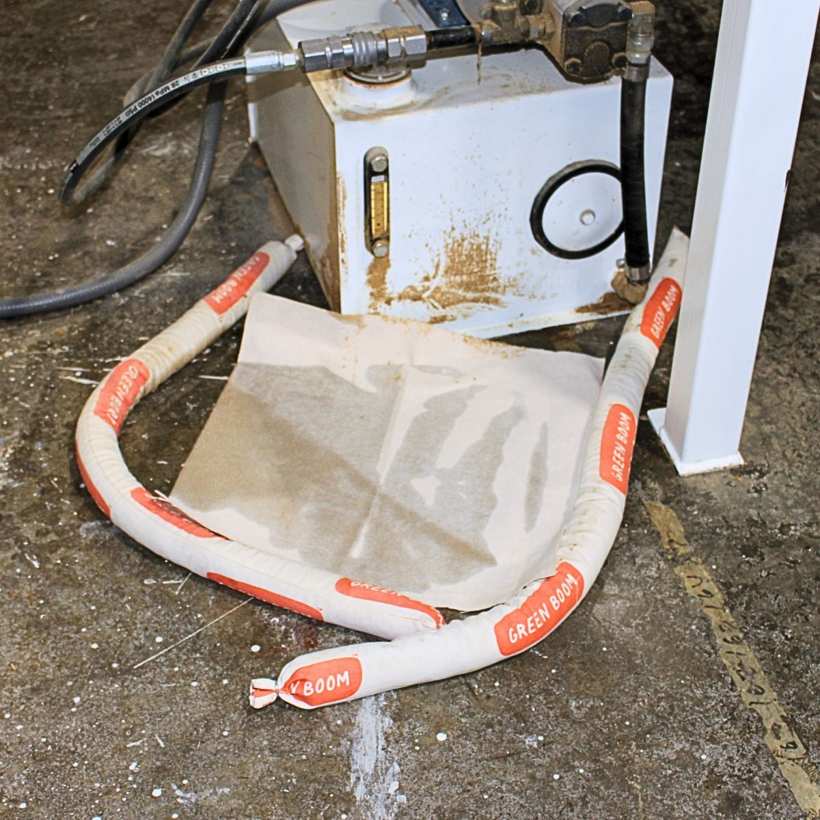
Oil-only absorbents keep working in rain and on water, so you are not paying to haul water to disposal.
More oil held per unit means less spent absorbent leaving the site.
100% biobased, USDA BioPreferred® and DIN CERTCO certified, for a measurable step in your ESG reporting.
Independently tested to the U.S. EPA Toxicity Characteristic Leaching Procedure.
Oil changes, fluid swaps, and leaking vehicles make drips a daily part of shop life. Green Boom picks up motor oil, transmission fluid, and fuel fast, with no silica dust and no plastic in the drum.
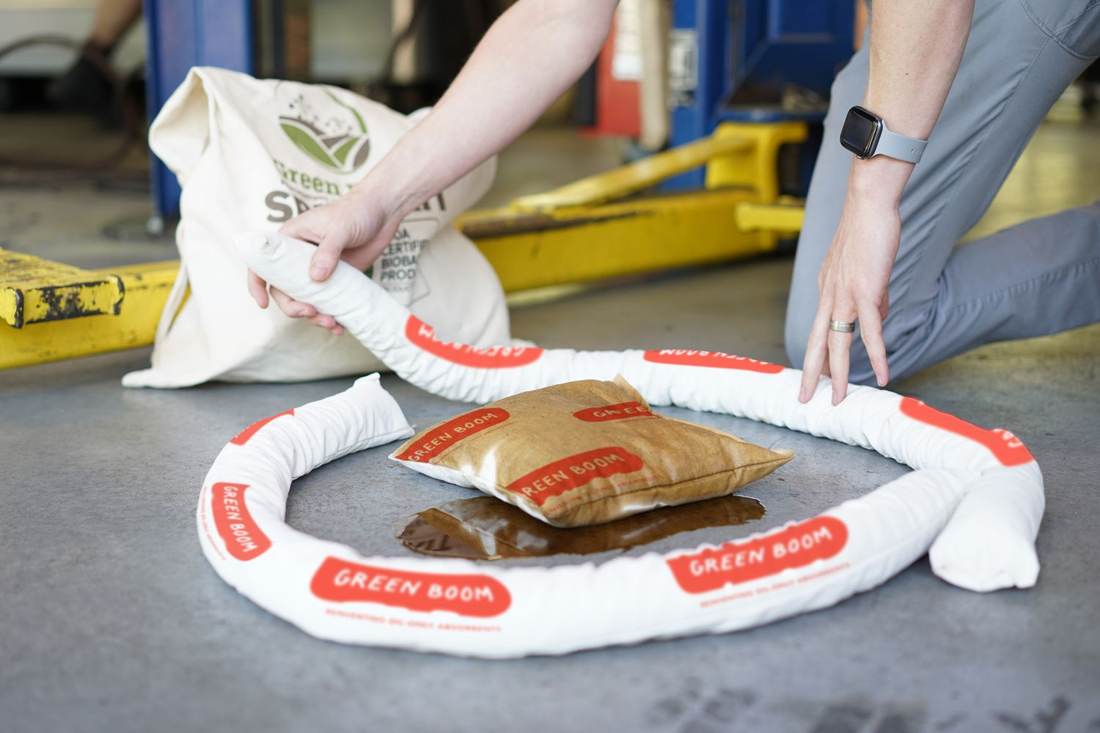
Pads and pillows catch drips under lifts and during oil and filter changes.
Loose absorbent picks up oil on concrete in one sweep and leaves no slick behind.
Strap-bag spill kits ride in service trucks, tow rigs, and fleet vehicles.
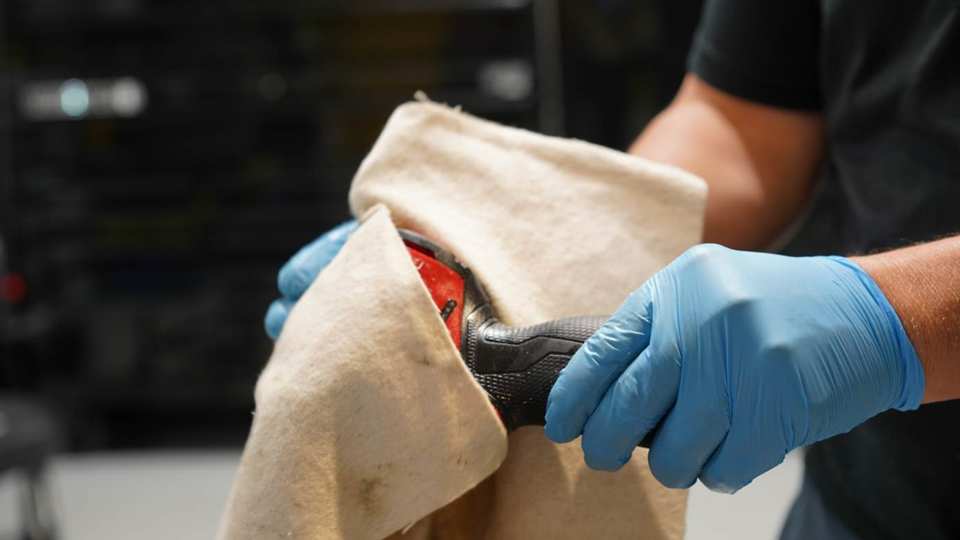
Unlike clay floor sorbents, Green Boom loose absorbent contains no crystalline silica.
Oil is locked in, not smeared around, so technicians are not walking on a slick.
About 1.7 lb of Green Boom does the work of 25 lb of clay, so there is far less to sweep, bag, and haul.
Independently tested to the U.S. EPA Toxicity Characteristic Leaching Procedure.
Fire departments, hazmat teams, and spill contractors need absorbents that deploy fast and keep working. Green Boom booms float and wick oil from the first minute, and our socks and kits are ready to grab and go.
Loose absorbent and socks contain fuel and oil from crashes before they spread.
Booms contain and recover oil on rivers, lakes, and harbors, without soaking up water.
Spill kits sized for engines, rescue trucks, and response trailers.
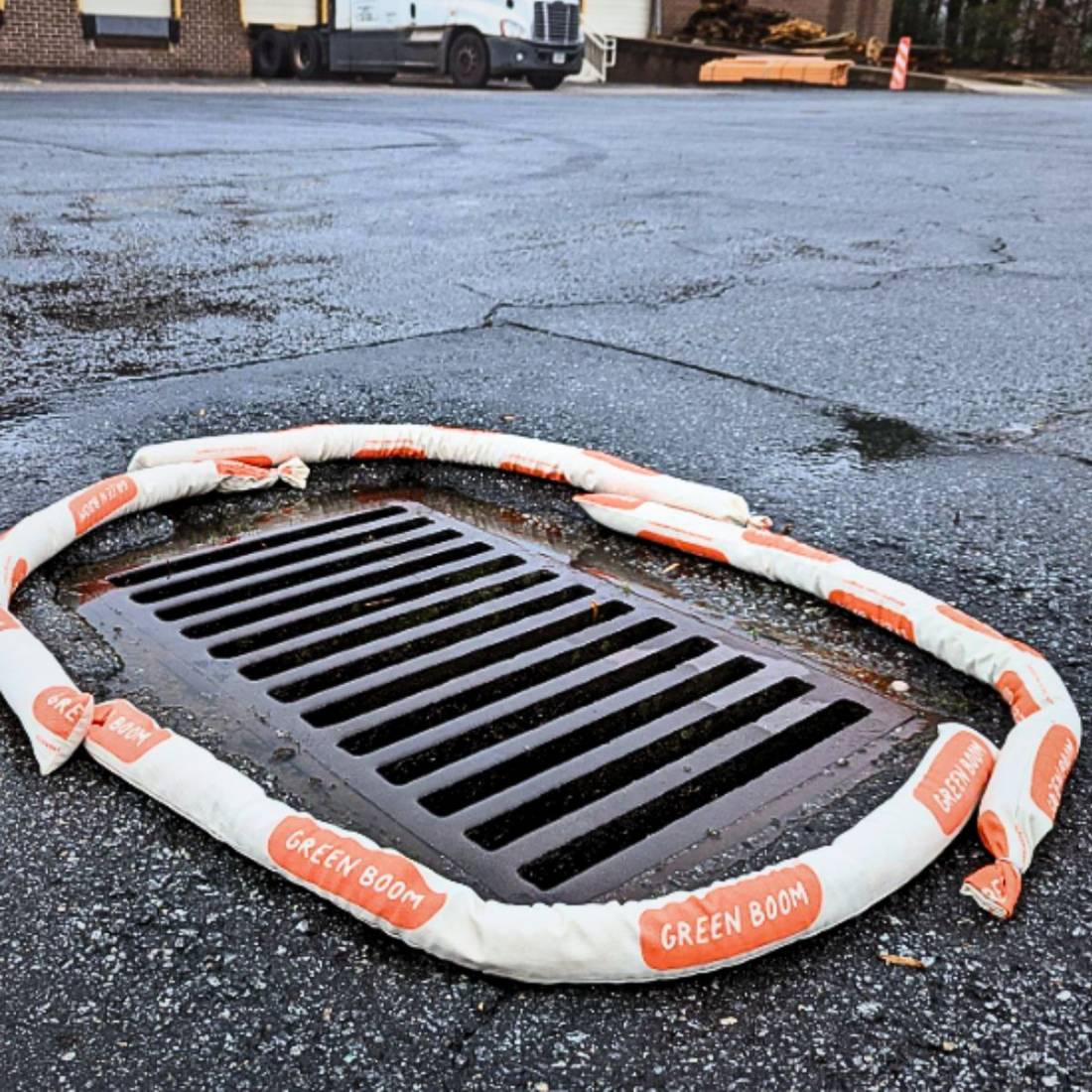
Socks, booms, and pillows meet the EPA definition of a sorbent under the National Contingency Plan.
Oil-only absorbents float and repel water, even in heavy rain.
100% biobased, so recovered material contains no polypropylene.
Independently tested to the U.S. EPA Toxicity Characteristic Leaching Procedure.
Excavators, loaders, generators, and fuel trucks bring hydraulic oil and diesel to every job site. Green Boom keeps leaks off the soil and out of stormwater, with no plastic to sort from your waste.
Pads and pillows go under machines during service, and socks ring leaking equipment.
Pads and loose absorbent handle drips at fuel tanks and refueling points.
Socks guard inlets and site drains as part of your stormwater pollution prevention plan.
Strap-bag and drum kits ride on service trucks and stay at the site trailer.
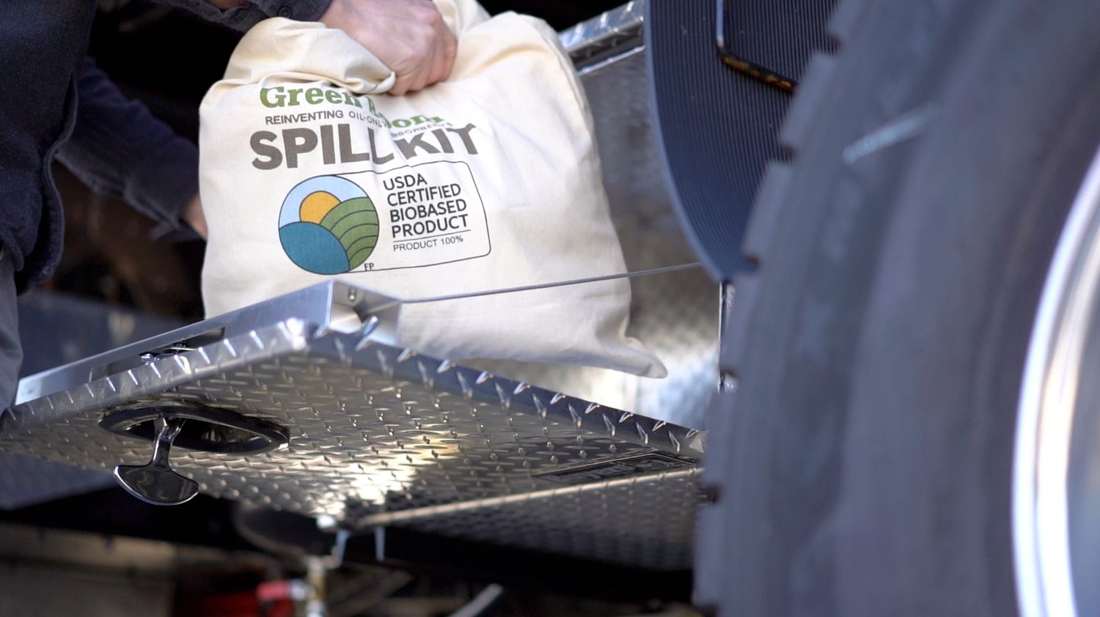
Oil-only absorbents repel water, so they keep working on wet, open sites.
Lighter, smaller waste than clay, and no plastic in the dumpster.
USDA BioPreferred® and DIN CERTCO certified products support your project’s sustainability goals.
Independently tested to the U.S. EPA Toxicity Characteristic Leaching Procedure.
Presses, CNC machines, compressors, and drum storage leak oil every day. Green Boom keeps walkways dry and safe, cuts the number of absorbent changeouts, and keeps plastic out of your waste stream.
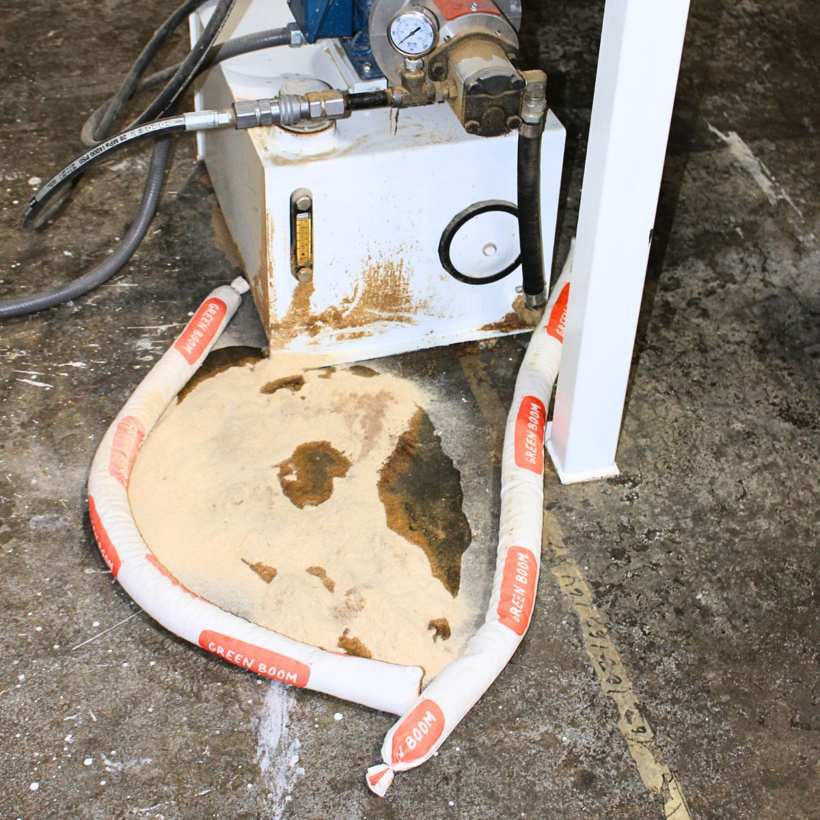
Socks ring machines, and pads catch steady drips from presses, CNC machines, and compressors.
Loose absorbent clears floor spills in one sweep to help prevent slips.
Drum spill kits and refills stage at loading docks and maintenance areas.
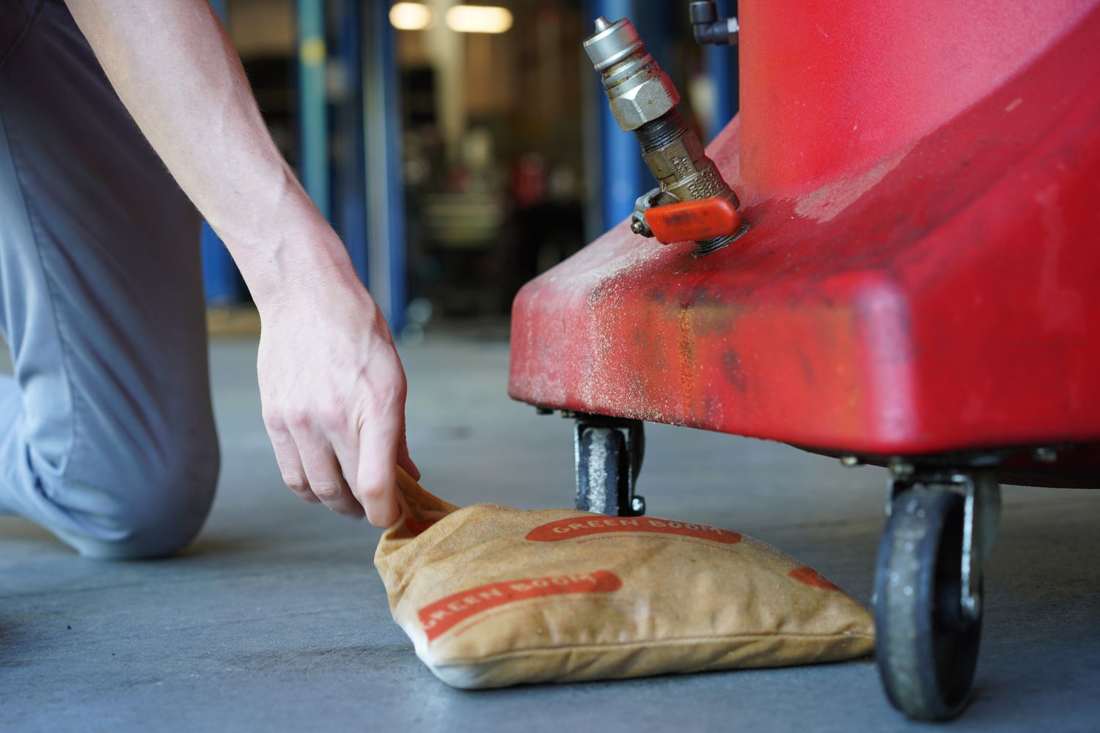
Pads can be reused up to 10 times, so crews change absorbents less often.
Treat spent absorbent with Oily™ instead of sending plastic to landfill.
USDA BioPreferred® and DIN CERTCO certifications support your sustainability reporting.
Independently tested to the U.S. EPA Toxicity Characteristic Leaching Procedure.
Marinas, ports, shipyards, and vessels need absorbents that float, hold oil, and shed water. Green Boom booms and pillows work on the water and in the bilge, with no polypropylene to shed into the waterway.

Booms stand by at fuel docks, and pads handle drips during refueling.
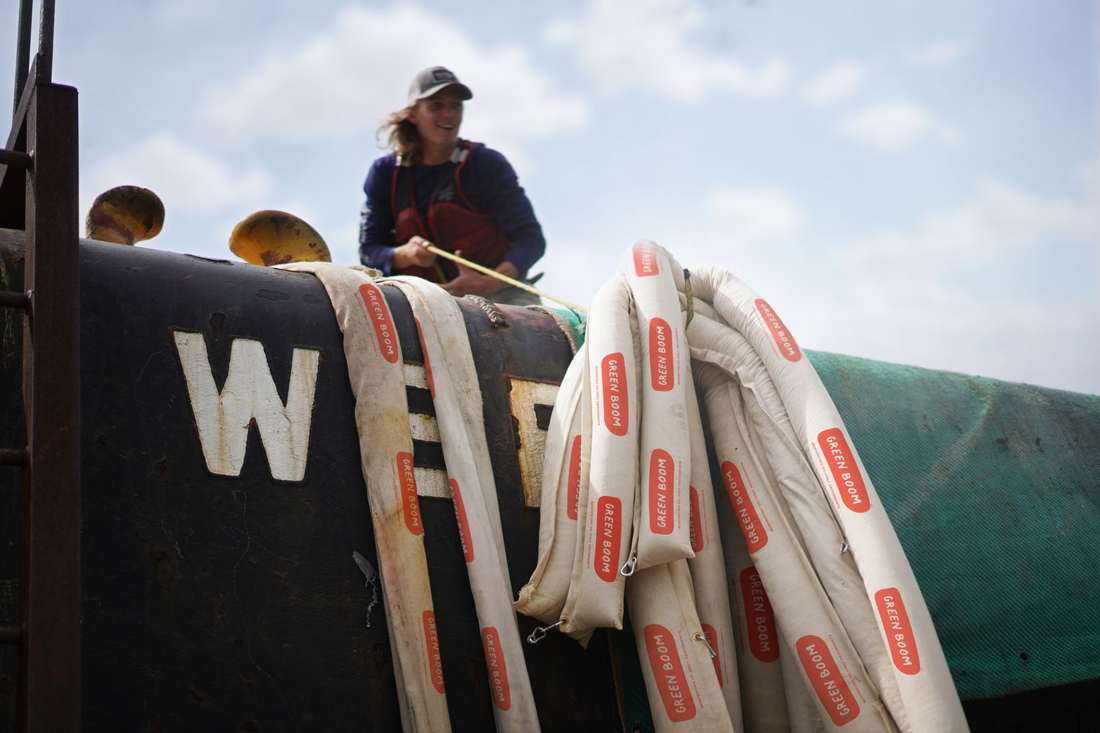
Hydrophobic booms float high and pick up oil, not water.
Cotton skins and natural-fiber fill, with no polypropylene to shed.
Meets the EPA definition of a sorbent under the National Contingency Plan, with a California OSPR sorbent license exemption.
Independently tested to the U.S. EPA Toxicity Characteristic Leaching Procedure.
Water and wastewater plants need biosolids that handle, haul, and dispose as solids. SludgeCure™-Bio binds the free water in dewatered cake and cleanout sludge, and Green Boom oil-only absorbents handle oil and fuel leaks around the plant.
SludgeCure™-Bio firms up wet cake from belt presses and centrifuges so it stacks and can pass the paint filter test.
Solidify sludge from lagoons, digesters, and clarifiers for loading and hauling.
Firm up drying-bed material, or keep biosolids moving when a press is down.
Unlike lime or kiln dust, SludgeCure™-Bio does not release ammonia or raise pH.
A plant-based carbon source, like the straw already used to compost biosolids.
Plant-based, with none of the crystalline silica found in cement and kiln dust.
Independently tested to the U.S. EPA Toxicity Characteristic Leaching Procedure.
Short demos of Green Boom absorbents at work, from shop floors and roadsides to open water.
Everything for the spill, from cab to plant floor.
A garage-ready spill kit, available through NAPA.
NAPA Sales Pro Chris Collins on our exclusive automotive partnership.
Lighter than clay, with no silica dust.
Wipe, catch drips, and reuse up to 10 times.
Drop under a leak, into a sump, or onto water.
Ring machinery, drains, and drip zones.
Float, wick fast, and contain oil on water.

Contain and absorb in one line. Built to order.
Break absorbed oil down. Close the loop.
Download the full catalog, product sheets, and safety data sheets for every Green Boom product.
Patented, 100% biobased absorbents that outperform polypropylene and clay, keep plastic out of your waste stream, and lower the total cost of every spill.
Fast wicking pulls oil in and locks it there, so it doesn’t leach back out.
Patented natural-fiber fill and cotton skins. No polypropylene in your waterways or your waste stream.
More oil held per unit, pads reused up to 10 times, and Oily™ to break spent absorbent down.
Your distributor can help you choose the right mix of Green Boom absorbents.
The invoice price is only part of what an absorbent costs. Green Boom lowers the parts you don’t see: units used, time spent changing them out, and what you pay to haul them away.
Each unit holds more oil, so every spill takes fewer socks, pillows, pads, or bags.
Fast wicking and durable construction mean fewer changeouts.
Less spent material, lighter than clay, and no plastic in the drum.
Our patented treatment makes both the natural-fiber fill and the cotton skin pull oil in and push water away. Oil stays locked in, and with Oily™ it breaks down instead of going to landfill.